Cover by position, and why that is not the same as a legal ratio
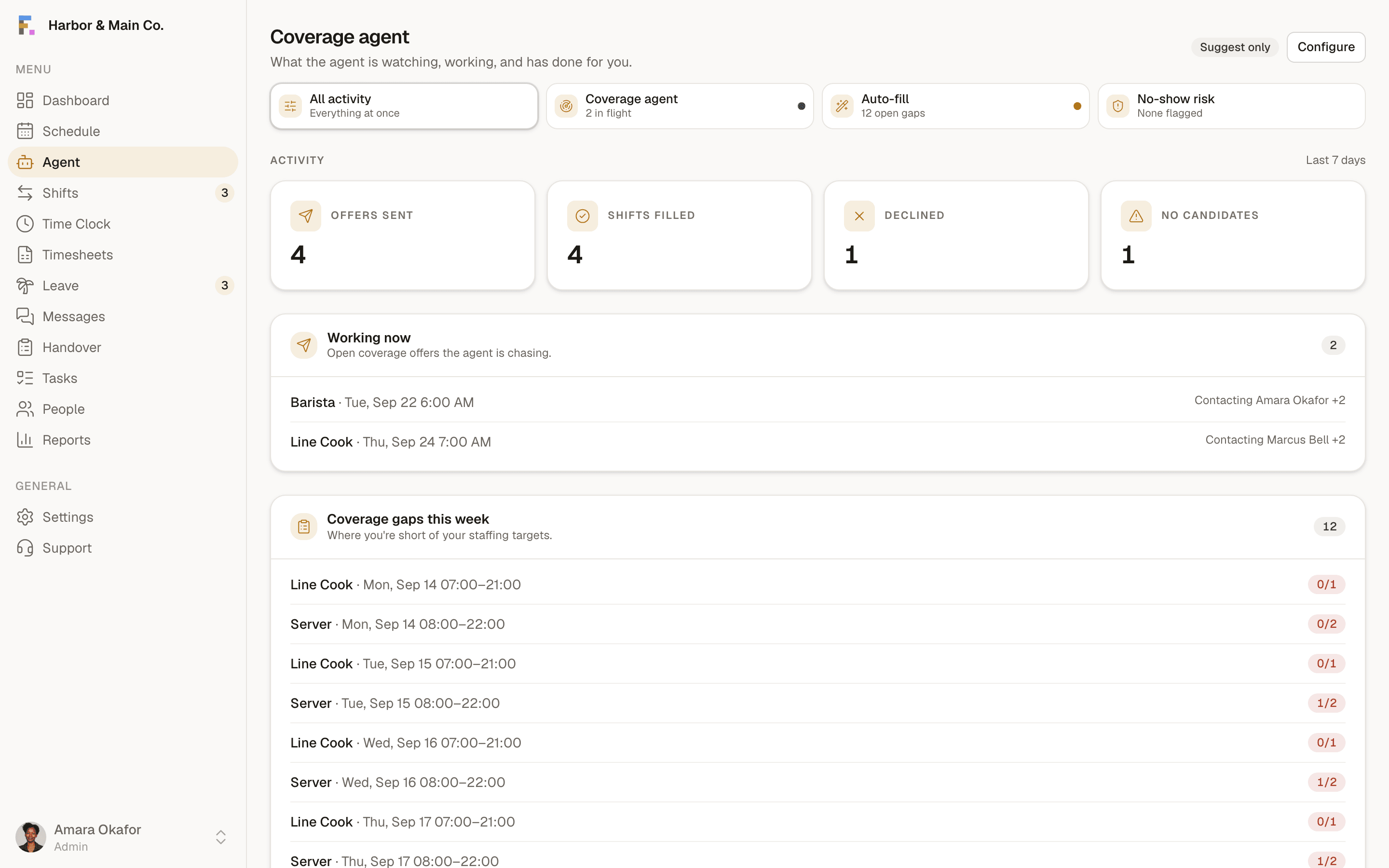
You can require a shift to carry a set number of people in a given position, so a slot short of RNs reads as short before it publishes. That is genuinely useful and it is worth being precise about what it is not.
Mandated staffing ratios differ by jurisdiction, by facility type and sometimes by unit, and they change. They are not modelled here as law. The number enforced is the number you enter, which makes it your staffing policy rather than a compliance guarantee. Any scheduling tool implying otherwise on a healthcare page is overstating, and a compliance-adjacent page is the worst possible place to do that.
The distinction is worth holding onto because the two fail differently. A cover requirement that is not met is a gap you can see and choose to accept. A statutory minimum that is not met is a decision nobody is entitled to make, and the tool's job there is to say so before publication rather than to quietly average the shortfall away across a week.
Credentials expire quietly, and rotas do not notice
Nothing announces a lapsed registration. The rota keeps looking correct, the person keeps working, and the problem surfaces during an audit or an incident, which are the two worst moments to find it.
Putting the expiry on the credential itself changes when the system knows. Eligibility for shifts requiring that credential ends on the expiry date rather than on the day somebody notices, and an approaching lapse is visible while there is still time to renew it. This is unglamorous and it is the single highest-value thing on a clinical rota, because the cost of getting it wrong is not operational.
An expiry is only useful if it arrives with enough room to act on. Somebody whose registration lapses next month is a renewal to chase; the same person on Monday's rota with a lapse dated Sunday is a shift you cannot legally fill with them and a conversation you did not plan to have. The warning window is therefore the setting that does the work, not the check itself.
Fair on-call is a distribution problem, not a goodwill problem
On-call concentrates. Not through malice, but because the fastest way to fill it is to ask whoever is most likely to say yes, and that is a stable set of people. Over months it reads as favouritism to everyone except the person doing the asking.
Weighting the ranking so that somebody who recently absorbed unsocial or on-call work is less likely to be picked again spreads it without anyone having to track it manually. The part that makes it defensible is the record of why each person was chosen. When a nurse asks why it was them again, having an answer that is not a shrug is what keeps the rota credible.
Fairness here does not mean identical. Some people want the unsocial hours and the money that comes with them, and a system that flattens everybody to the same count ignores that. What it should do is make the actual distribution visible, weigh recent burden when it suggests who to ask next, and record why it suggested them, so a pattern that has drifted can be seen rather than felt.
Bank and agency hours belong in the same total as everybody else's
Someone who works a substantive post and picks up bank shifts is one person with one body and one week. Rest requirements and fatigue do not distinguish between the contract the hours were worked under, even when the systems recording them do.
Where those hours sit in separate places the totals are each internally correct and jointly wrong, and the error is always in the same direction: it under-reports how much a person has worked. Keeping every assignment against the person rather than against the engagement means the rest gap and the hours total are computed on reality. It also means the overtime threshold in your settings is measured against the whole week, so the answer does not change depending on which system somebody happens to open.
There is an operational reason as well as a safety one. A ward that does not know somebody has already worked two long days elsewhere in the week will keep asking them, because from where it stands they look available. The request that gets declined at the last moment is usually the one that was never plausible, and the cost of finding that out late is a gap on the day.
A rota published late is one nobody can plan a life around
Notice is a clinical safety question before it is a courtesy. Staff who learn their shifts a few days ahead arrange childcare late, swap more, and are likelier to hand back a shift close to the day, which is precisely when it is hardest to fill.
The usual reason a rota goes out late is not idleness, it is that the last few gaps are unresolved and publishing feels like committing to something incomplete. Publishing the settled part on time and treating the remaining gaps as open, visible and being worked on is better than holding the whole week hostage to them. Changes after publication should then be recorded rather than silently applied, so anybody looking at the rota later can see what it said at the time and what happened to it.
Two habits make this easier than it sounds. Build the recurring pattern from a rule so the bulk of the week exists before anybody touches it, and treat the unresolved gaps as a short list to work rather than a reason to withhold the whole rota. What is left is usually a handful of shifts, and a handful of open shifts is a manageable problem in a way that an unpublished week is not.